On the Mountain
Above the escarpment: windows that face more wind and snow
Up on the Mountain, the weather is rougher than in the Lower City. The airport station on top gets a good deal more snow than the lower-city station at the Royal Botanical Gardens, and in winter the Mountain is prone to more wind-whipped lake-effect squalls. Windows feel that at the edges: seals, weather-stripping, rollers and cranks. We'll put you in touch with an independent pro who works on the Mountain, and we check back so your request doesn't stall.
At a glance
- Weather
- Snowier and windier than the Lower City
- Divide
- Upper James splits East and West Mountain
- Main street
- The Concession Street BIA
- Common jobs
- Weather-stripping, cranks, foggy glass, patio doors
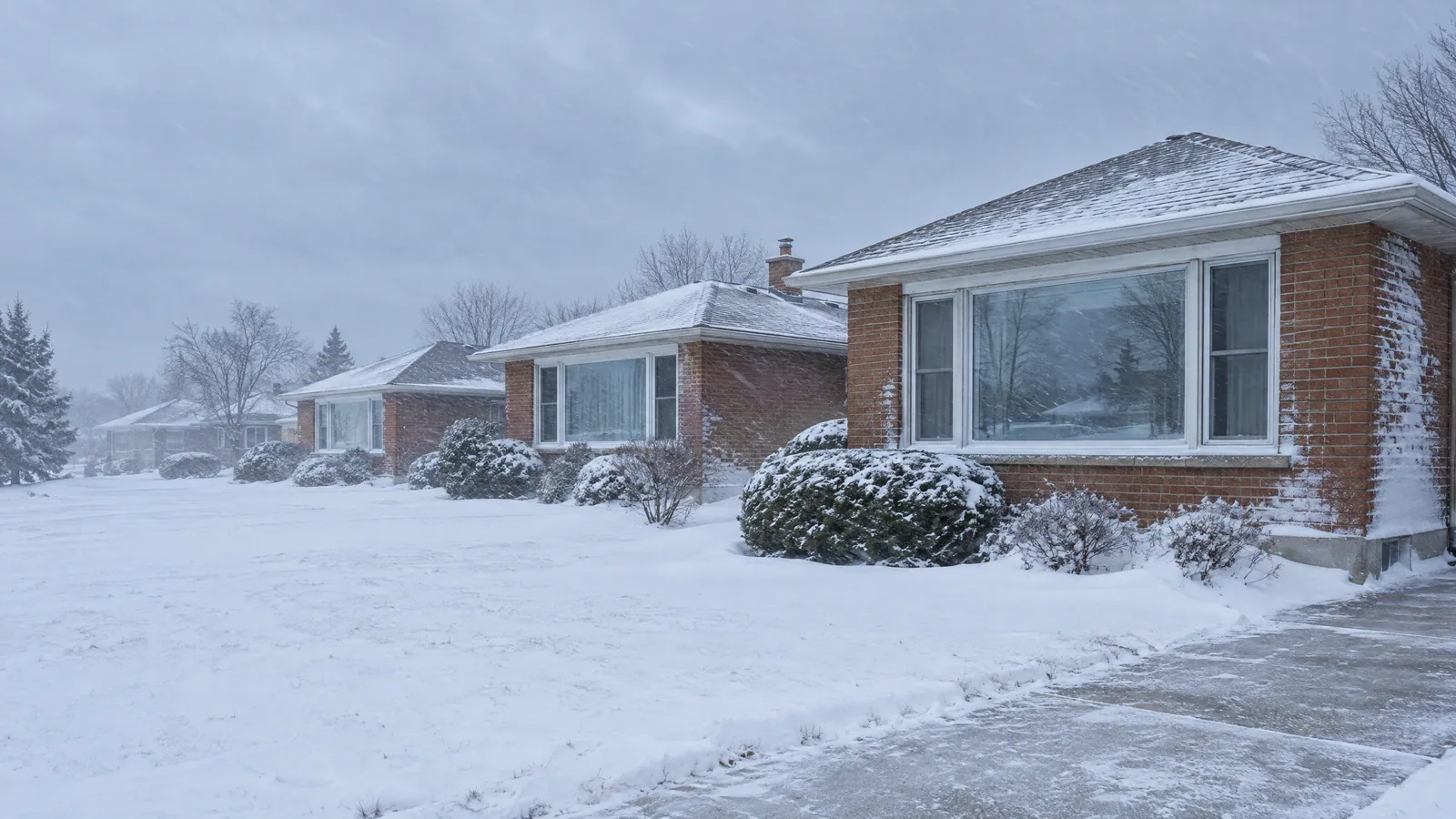
The Mountain's weather and your windows
The escarpment splits Hamilton into two climates. The Lower City sits in the shelter of the ridge; the Mountain is exposed, and in winter it catches lake-effect snow driven sideways. Strong-wind days and freezing rain are a regular part of the season.
That works a window hard. Wind pushes air and fine snow through any gap in the weather-stripping. Snow packs into slider and patio-door tracks and freezes. None of it is dramatic; it just means seals and hardware up here can need attention sooner.
Plenty of people up here still remember the November 2005 tornado that crossed the Mountain, and the windstorm of December 2021 that took down trees all over Hamilton.
Worn seals, drafty sliders and screens that take the wind
A drafty window usually isn't a failed window. On a slider, the culprits are worn pile weather-stripping, a latch that no longer pulls the sash tight, and rollers worn flat. On a casement, it's often a window crank or hinge that doesn't pull the sash firmly shut. Each is a part a pro can replace, and none needs a new window.
Screens take the wind too. A bent frame or a loose spline lets the mesh balloon and tear, and rescreening in the same frame puts it right. See window repair for hardware and window screen repair for screens.
Fogged sealed units
Two kinds of fog show up on Mountain windows.
Fog on the room side on a cold morning is condensation: humid indoor air meeting cold glass. It wipes off, and lower humidity and moving air help.
Fog sealed between the panes can't be reached with a cloth from inside or out. The seal around the sealed unit, which plenty of Hamiltonians call a thermopane, has failed. Wind and big temperature swings are hard on those seals. Usually the answer is a new sealed unit in the frame you have; a new window only when the frame is failing too. Foggy window repair sets out the options.
Patio doors in wind and snow
Snow drifts into the bottom track of a sliding patio door and freezes. Rollers wear under a door forced through ice. The latch stops lining up, and you're left with the familiar complaint: the sliding door won't latch.
Before anyone quotes a new door, ask whether it's the rollers, the track or the latch. Those are repairs, and keeping the track clear of snow helps them last. Replace the door when the frame is out of square or the sill leaks. See sliding door repair, and entry doors for a drafty front door.
Storm damage: what to do
If wind or a falling branch breaks a window:
- Keep everyone away from the glass and close off the room.
- Photograph the damage inside and out for your insurer.
- Tack heavy plastic or a sheet of plywood over the opening.
- Send us the photos and your address. We'll pass them to a pro who does broken window glass and will measure for the permanent pane.
After a big storm, lots of people need glass at once, so make the temporary cover a sturdy one.
Hamilton Mountain questions
Why do windows on the Mountain seem to wear faster?
Because they face more weather. Up top there's more snow and the lake-effect squalls hit harder, so seals, weather-stripping and hardware do more work each winter. That doesn't mean the windows are poor; the small parts wear sooner. New weather-stripping, rollers or a crank often bring a window back.
Wind whistles through my slider on the Mountain. Can it be fixed?
Usually it can be fixed. Worn weather-stripping, flattened rollers and a loose latch cause most slider drafts, and all three can be replaced. It's time for a new window when the frame is cracked or bowed, or air leaks around the outside of the frame. See sliding and double-hung windows.
How do I fix windows that fog up in the morning?
Find where the fog is. If it's on the room side and wipes off, it's condensation: bring indoor humidity down, run the bathroom and kitchen fans, and open blinds at night so air reaches the glass. If it's trapped between the panes, the seal has failed, and a pro will need to replace the sealed unit.
A storm broke a window on the Mountain. What now?
Make the room safe, take pictures for your insurer, and close the gap with plywood or plastic before more weather gets in. Then send the photos and your address. The pro we pass it to will measure for a permanent pane, which is usually made to size, so the cover has to hold until then.
Which parts of the Mountain do you cover?
We take requests from every part of it. We pass them to independent pros who take jobs above the escarpment, East, West and Central, on either side of Upper James, including the shops along Concession Street. Include your street or postal code. Heading south toward Binbrook? See the Binbrook and Glanbrook page.