Fog between the panes
A foggy window that won't wipe clear, and what fixes it
If the haze doesn't come off with a cloth, it isn't on your side of the glass. It's trapped inside the sealed unit, which means the seal has failed. That's annoying, but it isn't a mould problem and it rarely means a new window. We're a free referral service: we connect you with an independent Hamilton glass pro who replaces sealed units, and they quote and do the work.
- Often only the glass needs replacing
- The mould worry, answered plainly
- Pros who replace sealed units locally
The mould worry
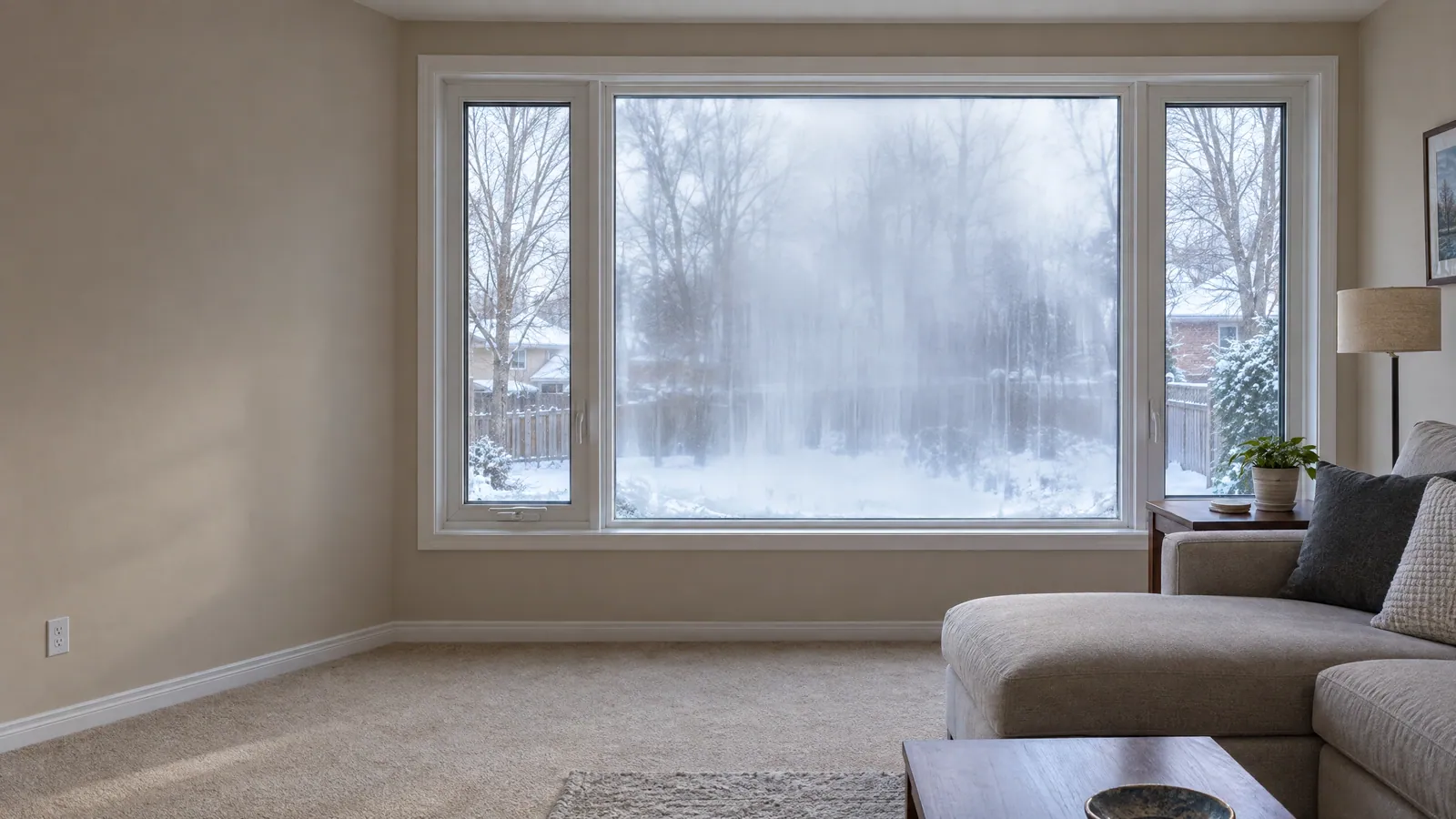
Is it on your side of the glass, or between the panes?
The real question behind most foggy-window worries: will this grow mould? It depends which side of the glass the moisture is on.
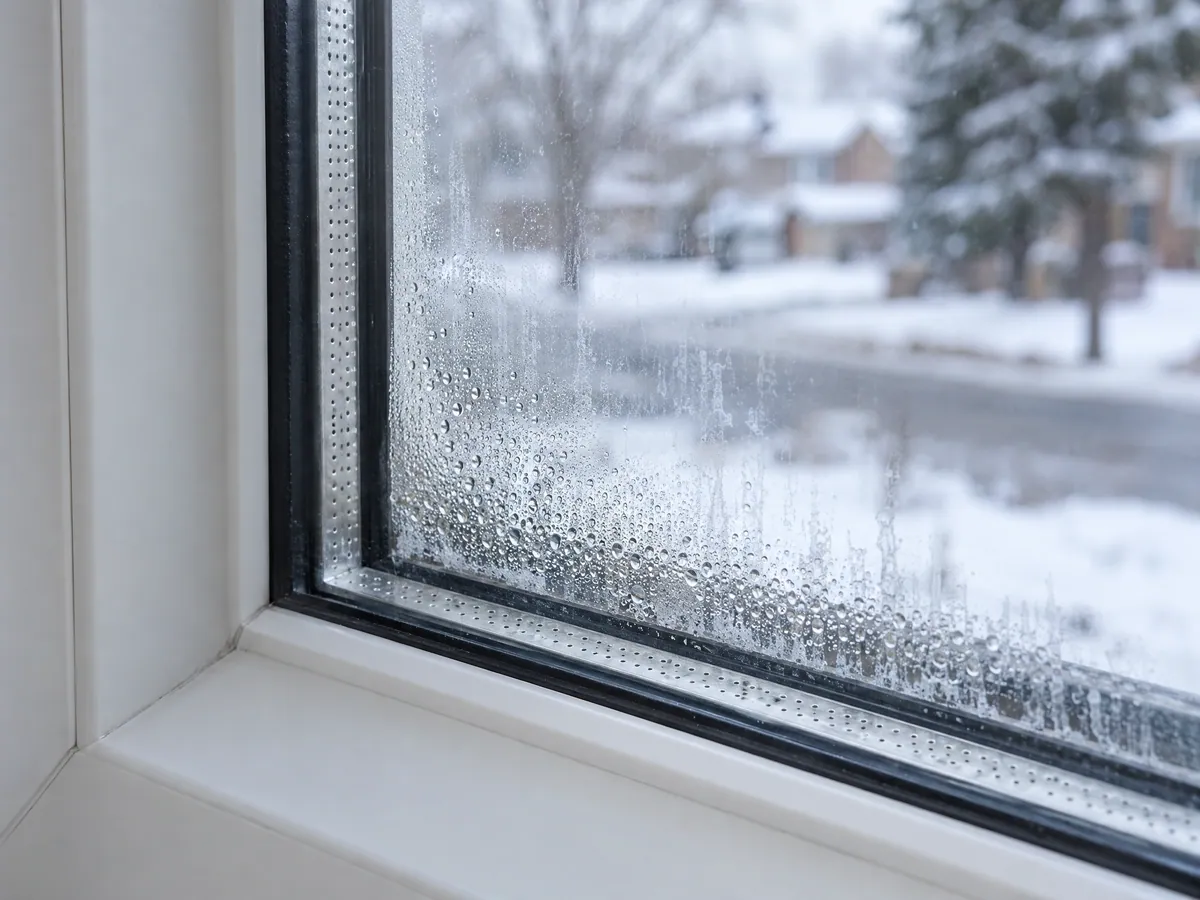
Water that beads on the room side and wipes away is condensation from the house: showers, cooking, drying laundry. Left on a wood sill day after day, it can feed mould. The fix is indoors: run the fans, open the blinds a little, and bring humidity down when it's cold out.
Fog or a milky film between the two panes never reaches the room, so it isn't a mould risk. It does mean the seal has let go, and it won't clear for good on its own.
Older Lower City houses add a third case. With wood sash inside and a storm outside, fog can gather between the two. That's damp room air slipping past the inner sash, not a failed seal; see storm windows.
Why it happens
Why the gap between the panes clouds over
A sealed unit (some say thermopane or thermal pane) is two panes held apart by a spacer bar and sealed round the edge. The spacer holds a drying agent that keeps the trapped air dry.
Sun warms that air and it pushes out; cold nights pull it back. Years of that breathing let the seal take in outside air until the drying agent is full. Then fog comes on cool mornings, fades by afternoon, and finally leaves a white film.
Up on the Mountain, windows take more wind and lake-effect snow than below the escarpment, so seals there have a harder life. But a Lower City window baking in afternoon sun can fail just as readily.
Plenty of Hamilton houses went up in the subdivisions built from 1980 on, and their original sealed units are now getting on. Even the City's heritage windows guidance notes that seals in modern insulated glass often fail.
Your options
Replacing just the sealed unit: when the frame is worth keeping
With fog between the panes, there are three honest routes. The pro we match you with looks at the frame, the sash and the window's age before suggesting one.
The repair-or-replace guide walks through it; for other problems, see the windows overview.
A new sealed unit in the window you have
Frame, sash, trim and hardware stay. A new unit is made to size and set into the same opening. It suits a frame that's square, dry and solid.
A new sash with the glass in it
On some casements, the opening part can be replaced whole when the hinges or corners are tired too. Worn cranks alone are a window repair job.
A whole new window
When the frame is soft, air leaks round it, or several units are going at once, replacement windows may make more sense.
Defogging
Defogging treatments vs new glass: what each really fixes
Defogging means drilling small holes in the glass, cleaning and drying the space, then plugging the holes.
What defogging can do
Clear the view on a unit that isn't yet etched, without waiting for new glass. Some owners find that enough for one window.
What it can't do
Put back a factory seal or the gas in the gap, or lift etching. Ask any provider what they promise, in writing.
What a new unit does
Restores the sealed, insulating space and can bring better glass. It costs more and means a wait while it's made.
Permits and rebates
Permits and rebates: why a glass-only swap needs neither
New glass in an existing window doesn't change the opening. The City's building permit page says even a whole window replaced at the same size and spot needs no permit unless a fire-resistance rating applies. In heritage districts, repairing window glass is among the jobs that usually don't need a Heritage Permit.
The flip side: Ontario's Home Renovation Savings program pays per opening only for complete ENERGY STAR certified windows, bundled with other upgrades. A new sealed unit doesn't count, and there's no City program for window work. Check current rules before planning around it.
What affects the quote
What makes one sealed-unit job cost more than another
Every unit is made to measure. In a newer house, in Binbrook or Waterdown say, check your paperwork first: a fogged unit may still be under warranty. Otherwise, these move the price:
- Size and shape, including big picture windows and arches
- What's inside: plain glass, a heat-reflecting coating, gas fill or safety glass
- How the unit is held in, and whether the sash has to come out
- Access, such as a second-storey or stairwell window
- How many units are done in one visit
- The condition of the frame
Units are made to order: one visit to measure, another to fit.
Ordering the glass
What a new unit can include
A thin low-E coating helps keep heat in the room, and gas between the panes slows heat through the gap. A spacer that runs warmer at the edge cuts the cold strip where condensation starts, which helps on a windy wall. Where the building code calls for safety glass, as in a door or the sidelight beside one, the unit must be tempered or laminated.
Questions
Foggy window questions
Explore your options
Other window problems we can help with
Pros replace sealed units on both sides of the escarpment, including the Mountain, Stoney Creek, Binbrook, Waterdown and Ancaster.
Send a photo of the foggy pane
Say which room it's in, roughly how big it is, and whether you're below or up on the Mountain. A close shot of a bottom corner, where the spacer shows, helps. We pass it to a local pro who replaces sealed units, and they come back with a quote.