Stoney Creek · Hamilton, Ontario
Stoney Creek windows, below and above the escarpment
Stoney Creek was its own town until it joined Hamilton in 2001, and it sits on both sides of the escarpment: the Old Town below, newer subdivisions up on the Mountain. Which side your house is on says a lot about its windows: when they went in, what wears out first and how much weather they take. We're a free referral service. Tell us what's wrong with the window or door, and we pass it to an independent local glass pro who does that kind of job and quotes it.
At a glance
- Housing
- 1970s–80s streets below the escarpment; 1990s–2000s subdivisions on the Mountain
- Common jobs
- Foggy sealed units, sliders, patio doors, screens
- Permits
- City of Hamilton rules, same as the rest of the city
- Coverage
- Lower Stoney Creek and the Mountain side
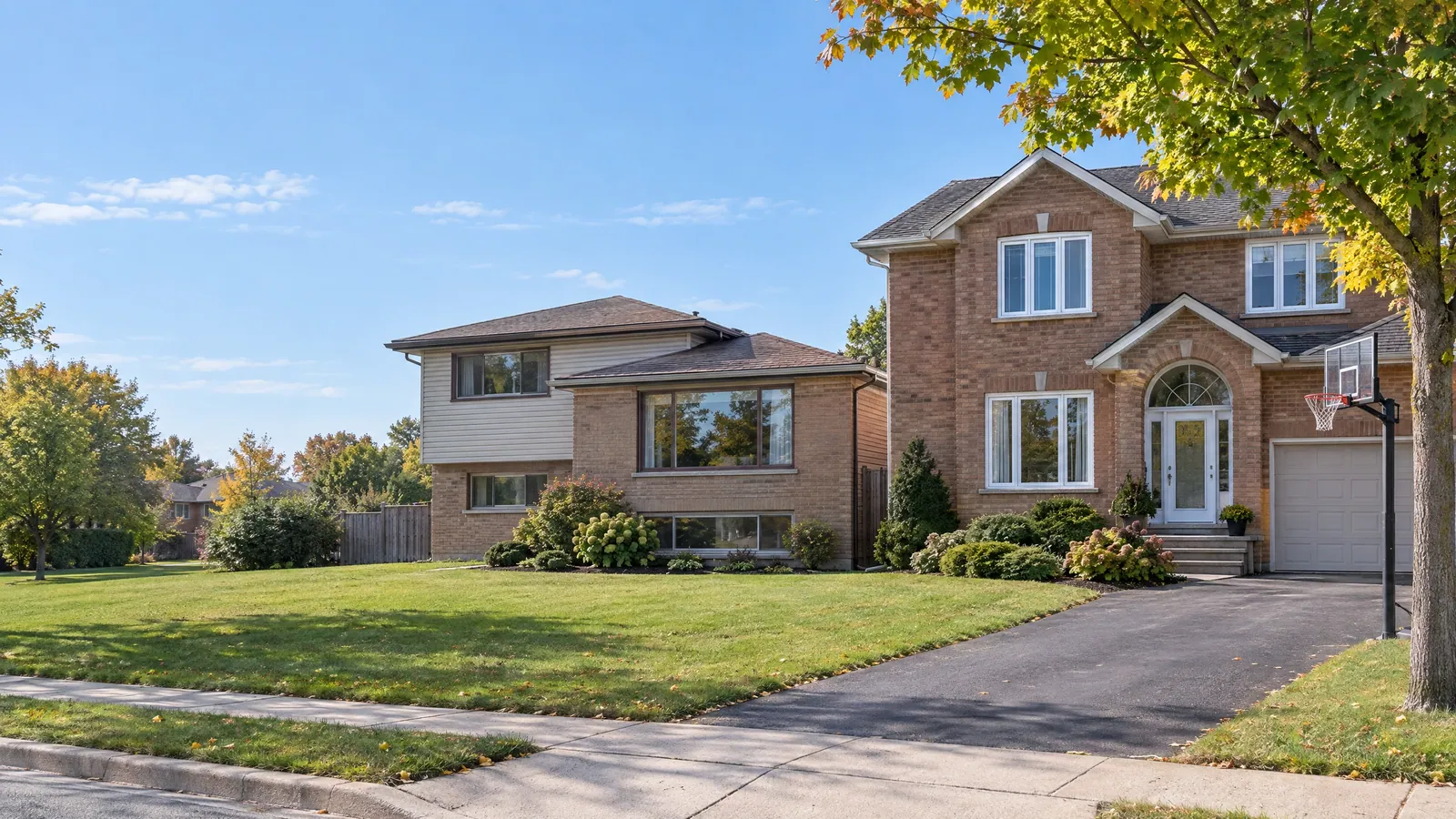
Below the escarpment, then on top of it
Stoney Creek's houses went up in two main stretches. Below the escarpment, residential streets filled in through the 1970s and 80s. On the Mountain, the west side grew through the 1990s and 2000s.
Each stretch has its own typical window. Houses from the first often have horizontal sliders and a sliding patio door, and if those are original, their rollers, latches and seals have had decades of use. Houses from the second more often have casements that crank open, with sealed units now old enough to start failing.
The escarpment changes the weather too. The top gets more snow and wind-driven lake-effect weather than the streets below, so sliders, patio doors and screens on the Mountain side work harder all winter.
Foggy glass: often a new pane, not a new window
A foggy window, with a haze or droplets you can't wipe off from either side, means the seal around the double glass has failed. Pros call that glass a sealed unit (some say thermopane). In most frames from either building era, a new sealed unit can be made to size and set into the existing sash, and the frame, trim and paint stay as they are.
That's the sensible first fix when the frame is sound and only a pane or two has fogged. It stops making sense when the frame is cracked, the sash has warped, or fog is spreading across the house. Our foggy window repair page sets out the options side by side.
Sliders and patio doors
Anything that slides wears in the same places: rollers, tracks and latches.
- Sliding window repair: a slider that grinds, jumps its track or won't latch usually needs rollers, a cleaned-up track or a new latch, not a new window.
- Patio door repair: a door that drags, won't lock or whistles at the meeting rail often needs new rollers, an adjustment or fresh weatherstripping.
- Window screens: torn mesh and bent frames, more common on the windy side of the escarpment, are a small job on their own.
Old Town, heritage and permits
The Old Town, below the escarpment, is where Stoney Creek began, and its main street is one of the City's business improvement areas. None of Hamilton's heritage conservation districts is in Stoney Creek, but single properties anywhere in the city can be designated. On a designated property, the City requires a Heritage Permit before windows, doors or even removable storm windows are replaced. Fixing a broken pane usually doesn't need one.
Otherwise, Stoney Creek has followed the City of Hamilton's building rules from 2001. The City's building permit page says a window replaced at the same size and in the same spot doesn't need a building permit unless a fire rating applies. A bigger opening, or one that moves, does.
When new windows make more sense
A new window is worth pricing when the frame has failed rather than the glass: a cracked corner, a soft sill, a slider track worn through, or cold air coming in around the frame. It's also worth pricing when most of the windows are failing at once.
When you compare replacement window quotes, ask what each includes: removing the old unit, insulating around the new one, and the trim inside and out. Our guide to repairing the glass or replacing the window walks through the choice.
Stoney Creek questions
My Stoney Creek house is from the 1990s and one window has fogged. Do I need a new window?
Probably not. If the frame is solid and the window still works, a pro can order a new sealed unit for the existing sash, leaving the frame and trim alone. Check first whether the glass is still under the maker's warranty. A new window makes more sense when the frame is cracked or several are failing together. Send a photo of the fogged glass and the pro can tell you which applies.
Do you cover both lower Stoney Creek and the Mountain side?
Yes. Both halves are part of the City of Hamilton, and we take requests from either side of the escarpment. Put your postal code on the request so it goes to a pro who works your end of Stoney Creek. If you're out toward the rural edges, the service areas page explains how we check coverage for an address.
The rollers on my 1970s Stoney Creek slider are shot. Can they be replaced?
Usually. Rollers, latches and weatherstripping for common sliders are still made, and a pro can often match or adapt a part from a photo and a measurement of the old one. A slider that has been dragging for years may also need its track cleaned or capped. When a part really can't be found, the choices are a new sash in the old frame or a new window.
Does a house on the Mountain side of Stoney Creek need tougher windows?
Not different rules, but the details matter more. Up top, wind and snow find every gap, so weatherstripping that seals, latches that pull the sash tight and screens that sit firmly in their frames earn their keep. When you're pricing new windows or doors there, ask the pro how the product handles wind-driven rain and snow. Our guide to repairing or replacing helps with the bigger choice.